School Tie Re-design
Throughout this academic year, the Student Council have played a leading role in reviewing and redesigning the school's tie. This project provided students with an authentic opportunity to influence an important aspect of school life while learning about leadership, consultation, democracy, and decision-making.
The process began with a series of Student Council meetings held across the year with Mr O’Hagan and Ms Jassal. Student Council representatives from each year group gathered feedback from their peers regarding the current school tie and discussed whether changes should be considered. Students shared a range of views, including ideas about modernising the design, improving school identity, and ensuring the ties reflected the values of the school community.
Following these discussions, Student Council members reported back to the wider Whole School Council. Through these meetings, students considered the opinions collected from tutor groups and year groups before agreeing that a review of the school tie should move forward.
This information was shared in a Student Council meeting with Ms Jassal and Ms Hall, where they decided on what criteria should be considered for designing the tie.
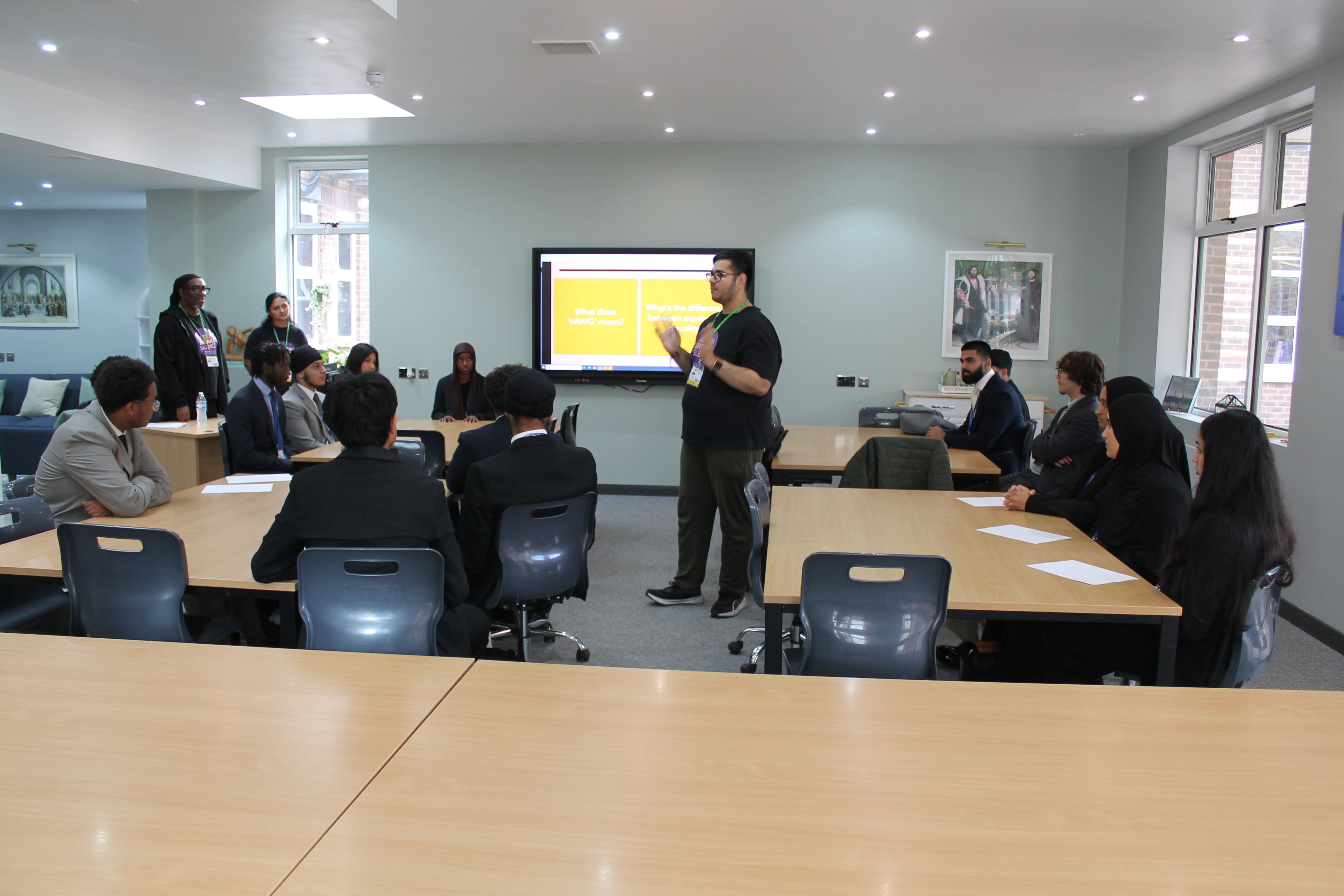
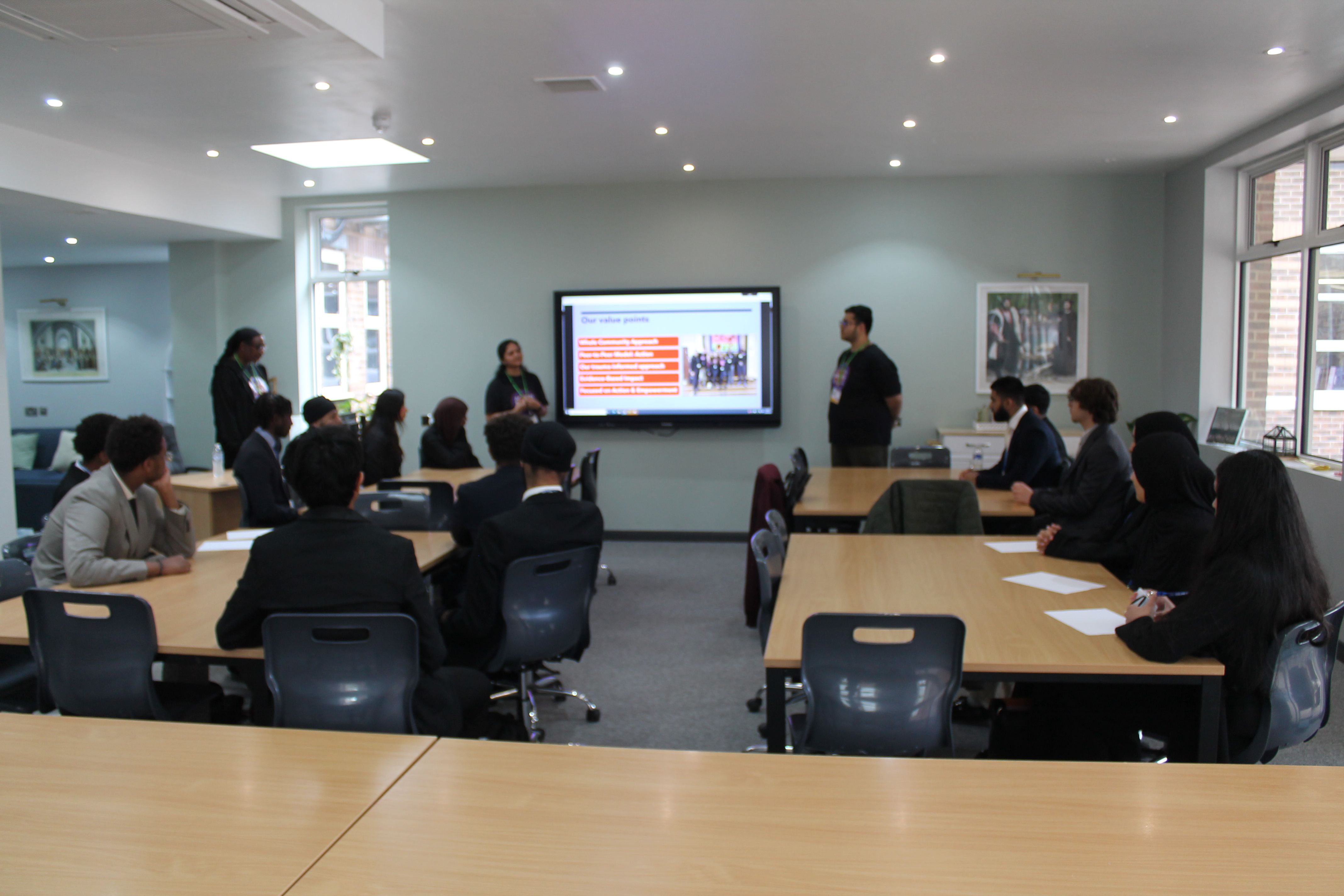
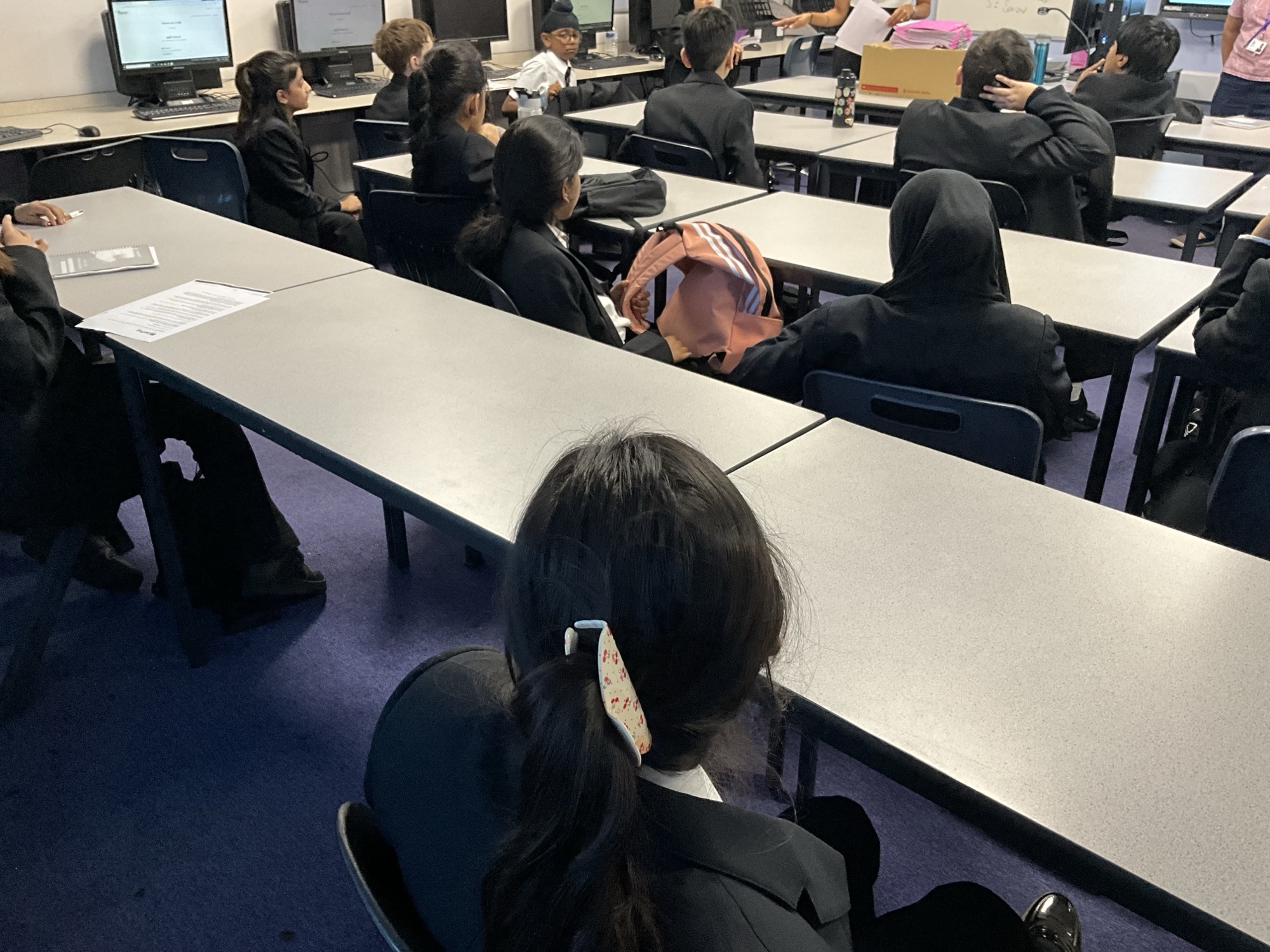
To ensure all students understood why the tie would be changing, and had an opportunity to contribute, members of the Student Council developed and delivered assemblies to KS3. During these assemblies, students explained:
- Why the tie's redesign was being considered
- The role of the Student Council in representing student voice
- The importance of democratic participation
- The process that would be followed to ensure every student had a chance to contribute
The assemblies encouraged students to become actively involved in shaping a visible part of the school's identity.
Design Competition
Following the assemblies, students in Years 7 and 8 were invited to participate in a tie design competition. Student Council members created a clear design brief and set of criteria to guide entries.
Designs were required to:
- Be practical and suitable for everyday school wear
- Incorporate school colours where appropriate
- Be distinctive and recognisable
- Be suitable for production as a school tie.
Students were given time to develop their ideas and submit their designs. The response was extremely positive, with many creative and thoughtful entries received from across both year groups.
Shortlisting the Designs
Once all entries had been collected, the Student Council met with Ms Jassal to review every submission. Students carefully considered each design against the agreed criteria and discussed the strengths of each proposal.
After thorough consideration, the council shortlisted the six strongest designs. These represented a variety of creative approaches while meeting the practical requirements for a school tie.
The shortlisted designs were then shared with tutor groups in key stage 3.
Learning About Democracy
Before voting took place, tutor groups participated in a lesson focused on democracy, representation, and voting systems. Students explored:
- The principles of democratic decision-making
- Why voting matters
- How elections and ballots work
- The importance of making informed choices.
This learning helped students understand that their vote would directly influence a real school decision.
Whole-School Vote
Following the democracy lesson, students were given the opportunity to cast a formal vote using ballot papers.
The voting process mirrored real democratic elections. Students were able to review the six shortlisted designs before selecting their preferred option. Ballot papers were completed confidentially and collected for counting.
The process ensured that every student's voice could be heard and that the final decision would be based on the views of the school community.


Counting and Publishing the Results
Student Council members took responsibility for counting the votes. Working carefully and transparently, students verified totals and ensured the process was accurate and fair.
Once the count had been completed, the winning design was confirmed and the results were published. The Student Council shared the outcome through tutor notices, assemblies, and school communications.
Students were proud to see that a decision affecting the whole school had been made through an enthusiastic democratic process.


Communicating with Parents
As the final stage of the project, members of the Student Council worked together to draft a letter to parents and carers. The letter explained:
- Why the tie redesign project had taken place
- How students had been consulted
- The design competition process
- The democratic vote
- The winning design and next steps.
This communication celebrated the significant contribution made by students throughout the project and demonstrated the school's commitment to student leadership and student voice.
This project has been an excellent example of meaningful student participation. From gathering feedback and presenting assemblies to organising voting and communicating with parents, Student Council members have demonstrated leadership, responsibility, teamwork, and commitment to improving their school community.
Most importantly, students have experienced democracy in action and have seen first-hand how their ideas and votes can influence decisions that affect the whole school.
This process has shown the power of the student voice at Heston Community School, with students leading a project from initial consultation through to final decision-making and implementation.
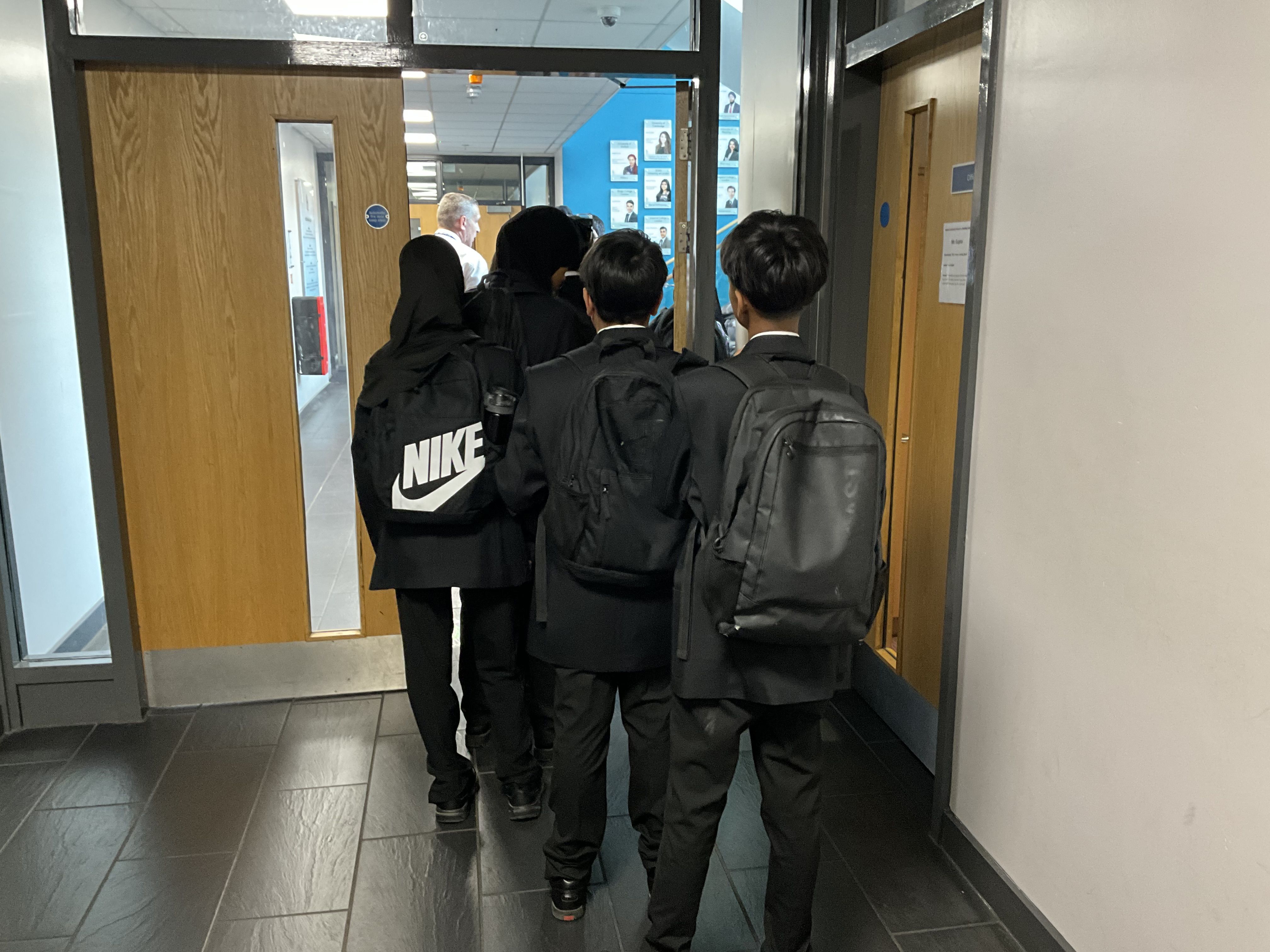
LB [7B] – Student Council: We were all stood eagerly waiting in line for our turn to choose which tie design we preferred. Despite the fact that many people wanted our basic tie design or something completely different, our minds were completely set on this momentous occasion where we got to express our opinions rather than everything being done for us without us having an opinion.
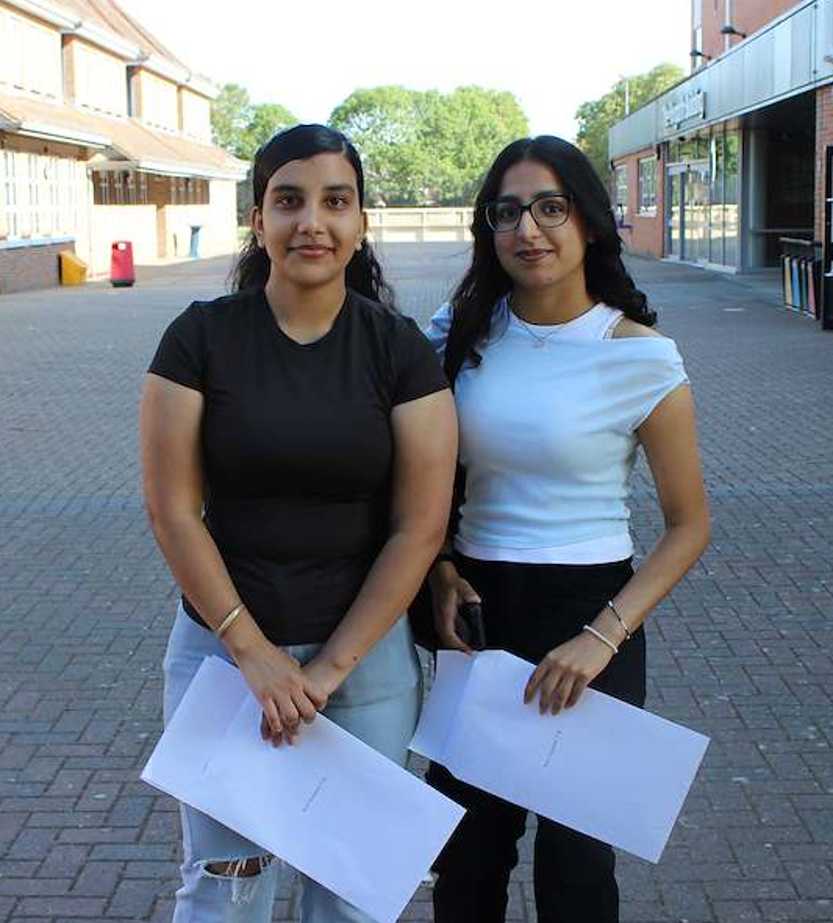
I contributed by sharing my ideas and giving an idea of boundaries and rules and how it would be nice if we could influence our PSHE lessons where we learnt about democracy.
AU [7P] – Student Council: My experience of student council allowed me to develop my skills of communication, coordination and listening by participating in discussions, listening carefully to the other members of the Student Council and working towards a goal. The main change of this academic school year was the re-design of our ties. We gave students the opportunity to design their own tie as a chance for it to be the new tie for the whole school. There were rules for submitting the ties such as deadlines and the tie required the school tie on the top part of the tie. From the hundreds of ties submitted, we narrowed them down to only 6. From there, we gave all the students a chance to vote out the 6 ties and Y7 had a lesson about democracy, as it links to students being able to have a chance to vote. Being on the Student Council allowed me to listen to the different views and opinions of students all around the school who also want to make positive changes to our school.


Ben Rixon [Y13] was invited to a Buckingham Palace Garden party, in recognition of the 70th anniversary of the charity, to receive his Duke of Edinburgh's Gold Award.


I’m interested in going into business, especially the financial side, because I study Business at school and enjoy working with numbers, analysing information and understanding how companies make financial decisions. I’m considering becoming a financial accountant or going into management for high-end car brands.
I’m interested in something related to finance, possibly becoming an accountant. I’ve chosen this path because I want to gain practical experience while developing skills that are useful in many industries. I enjoy working with numbers and understanding how money is managed in real businesses. I’m also interested in how financial decisions are made and how they affect the success of an organisation. I like the idea of earning money while learning and gaining real-life experience instead of only studying in a classroom.
I have chosen to pursue Biomedical Sciences because I’m interested in understanding the root causes of diseases rather than only treating the symptoms. Many science students go into medicine, but I want to focus on how illnesses develop and contribute to future medical breakthroughs.